
European Society of Toxicologic Pathology
GTP meeting 2000: Case No 3
case index | << previous case | next case >>
|
|



Abstract
Aim of the study
In a northern German wildlife park spontaneous deaths occurred in colonies of ring-tailed lemurs (Lemur catta), squirrel monkeys (Saimiri sciureus) and liszt monkeys (Sanguinus oedipus) with a generally short clinical period of apathia, anorexia and weakness. Abortions and stillbirths were observed in pregnant squirrel monkeys.
Materials & methods
To identify the cause of deaths, six lemurs, three squirrel monkeys, and three liszt monkeys were submitted for necropsy.
Results
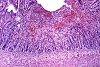
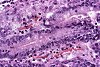
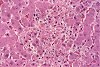
Grossly, in some animals a slight icterus and mild serous effusion in the thoracic cavity were present. The lungs were poorly retracted and exhibited variable degrees of alveolar oedema and emphysema. The myocardium appeared mottled, the spleen was enlarged and occasional pin-point greyish foci were detected in the liver. In some animals poorly demarcated ecchymal hemorrhages were present in the mucosa of the small intestine. Histologically, disseminated necrotizing nonsuppurative inflammatory foci were detected in brain, heart, lungs, spleen, liver, adrenal glands, mesenteric lymph nodes, small intestine, and skeletal muscles. Within these lesions protozoal tachyzoites were noticed extracellularly or in macrophages. Occasionally, protozoal cysts were detected in the brain. Protozoal microorganisms were identified as Toxoplasma gondii in histological sections using immunohistochemical methods. An antibody directed against Neospora caninum, a closely related coccidian parasite, failed to label the protozoal organisms.
Conclusions
Roaming house cats were suspected to have contaminated the food, bedding material and/or the enclosures of the primates with feces containing oocysts of Toxoplasma gondii. The presented epidemic underlines the particular susceptibility of new world monkeys and lemurs for disseminated toxoplasmosis.