
European Society of Toxicologic Pathology
GTP meeting 2000: Case No 11
case index | << previous case | next case >>
|
|



Abstract
Aim of the study
The feeding management has significant influence on the performance and health of weaned pigs. Supplementation of zinc oxide to creep feed has been reported to have beneficial effects on diarrhoea incidence and performance.
Materials & methods
In a fattening herd a sudden onset of hoof sloughing, lameness, canibalism and recumbency with tetraparesis was observed in approximately 20% of the weaned pigs.
Results
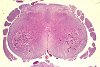
Clinically, affected animals were afebrile, alert and maintained appetite. Coronary bands were swollen and showed exsudation. The animals were lame and some lost their hoofs. Three affected pigs were submitted for necropsy. Pathomorphologically, gradually variable pododermatitis was present on the parietal and solear surface of the hoofs. The main findings in the central nervous system were poorly demarcated yellow-greyish areas with occasional hemorrhages confined to the ventral grey horns of the cervical and lumbar enlargements of the spinal cord. Histological examination revealed a bilaterally symmetric, focal poliomyelomalacia with degeneration and necrosis of neurons, vacuolisation of the neuropil, proliferation of capillaries and infiltration of gitter cells. The toxicological analysis of serum and liver samples of the affected animals resulted in extraordinary elevated levels of selenium. As source of the intoxication the mineral feed was identified with a selenium content of 613.0 mg/kg. The normal range of selenium in supplementary mineral feed is about 15.0 mg/kg.
Conclusions
The history of this case revealed that for the zinc supplementation of the creeping feed inexpensive zinc sulfate was used, which originated from the zinc industry and which was not certified as feeding supplement. The high contamination with selenium was responsible for this toxicosis in fattening pigs.